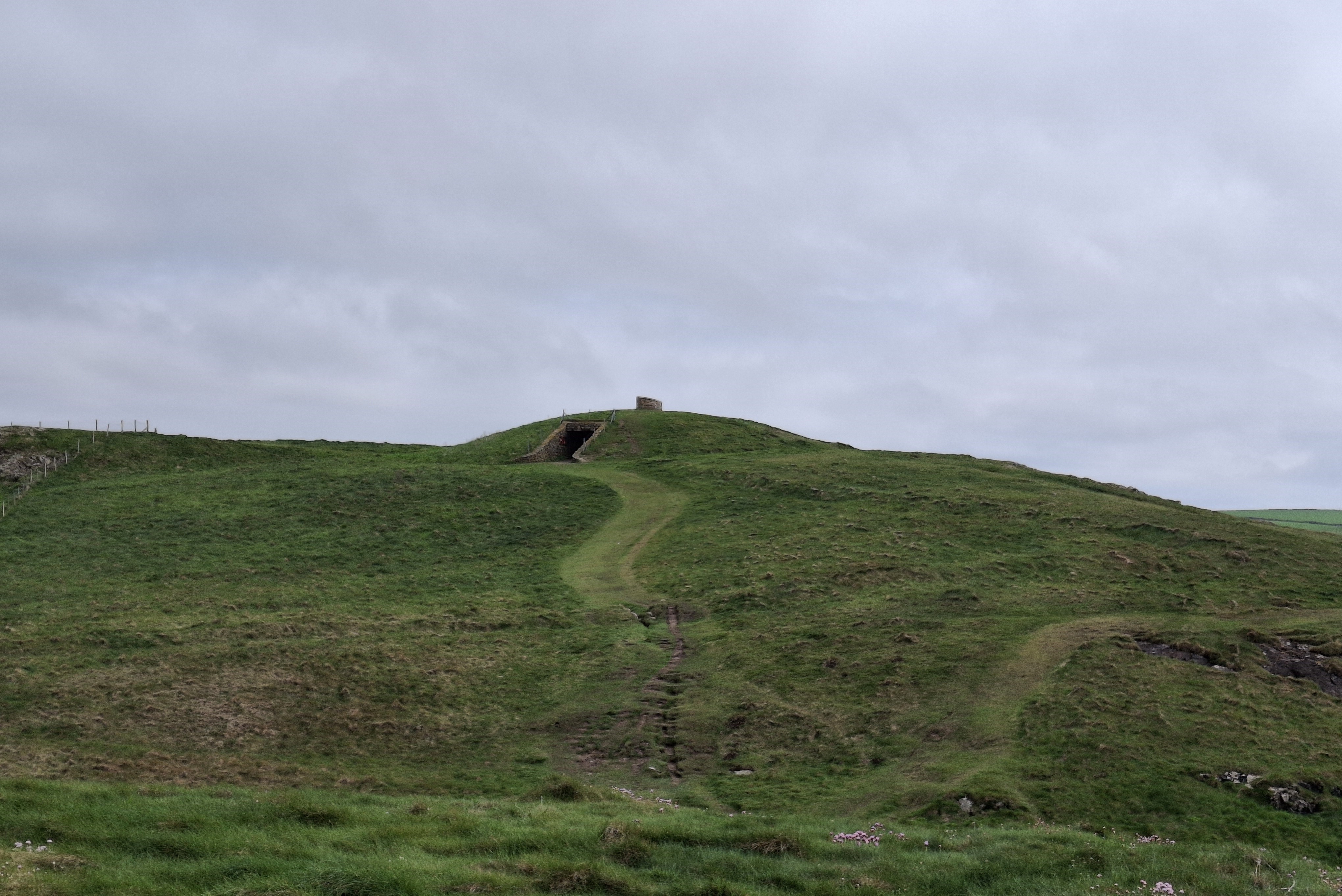
Continuing our explorations of ancient sites around the Isle of Anglesey, earlier this year we paid a return visit to Barclodiad y Gawres. Not far from our regular haunt in Rhosneigr, on the road to Aberffraw, this ancient tomb is one I’ve visited before – but it’s well worth another, better documented trip.
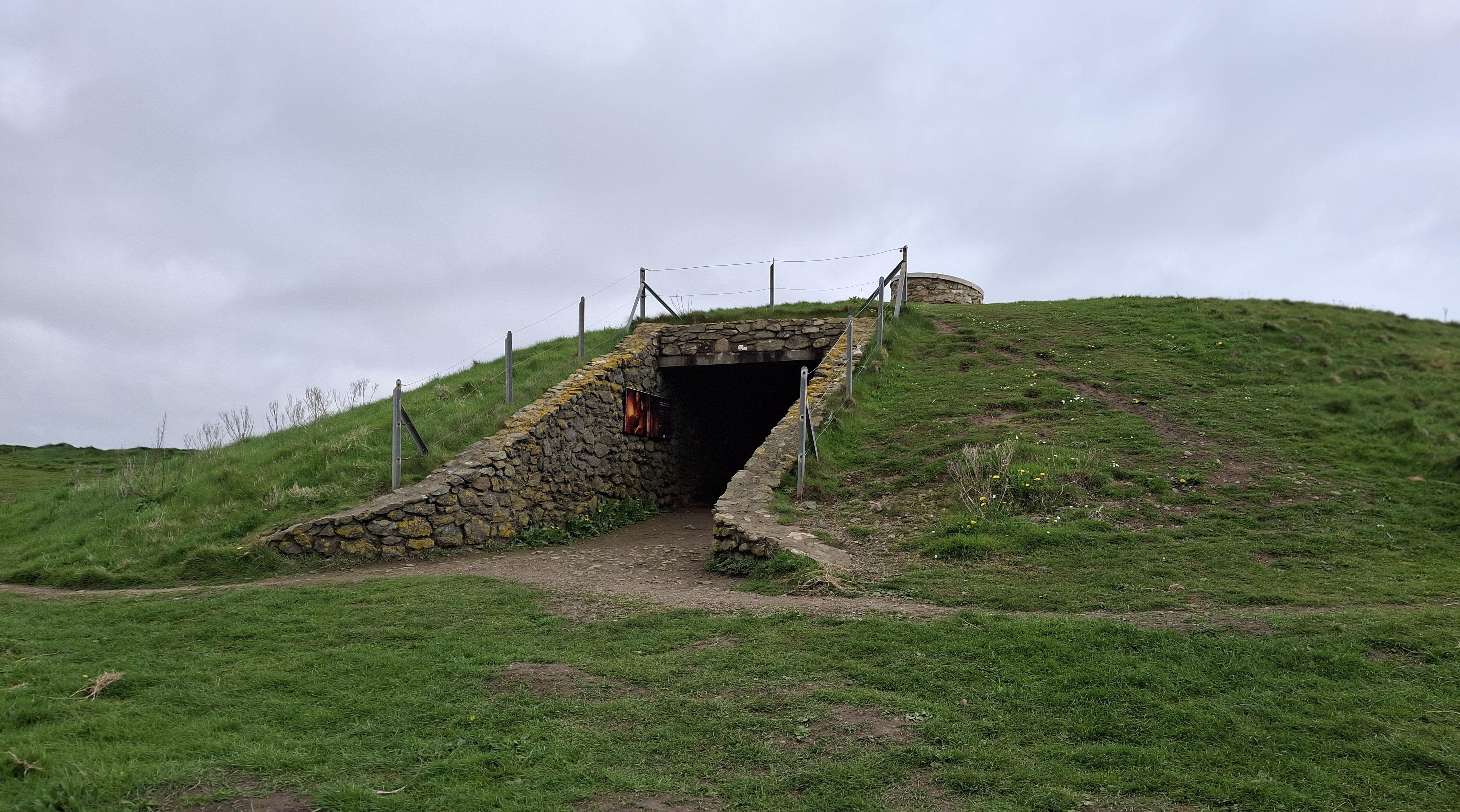
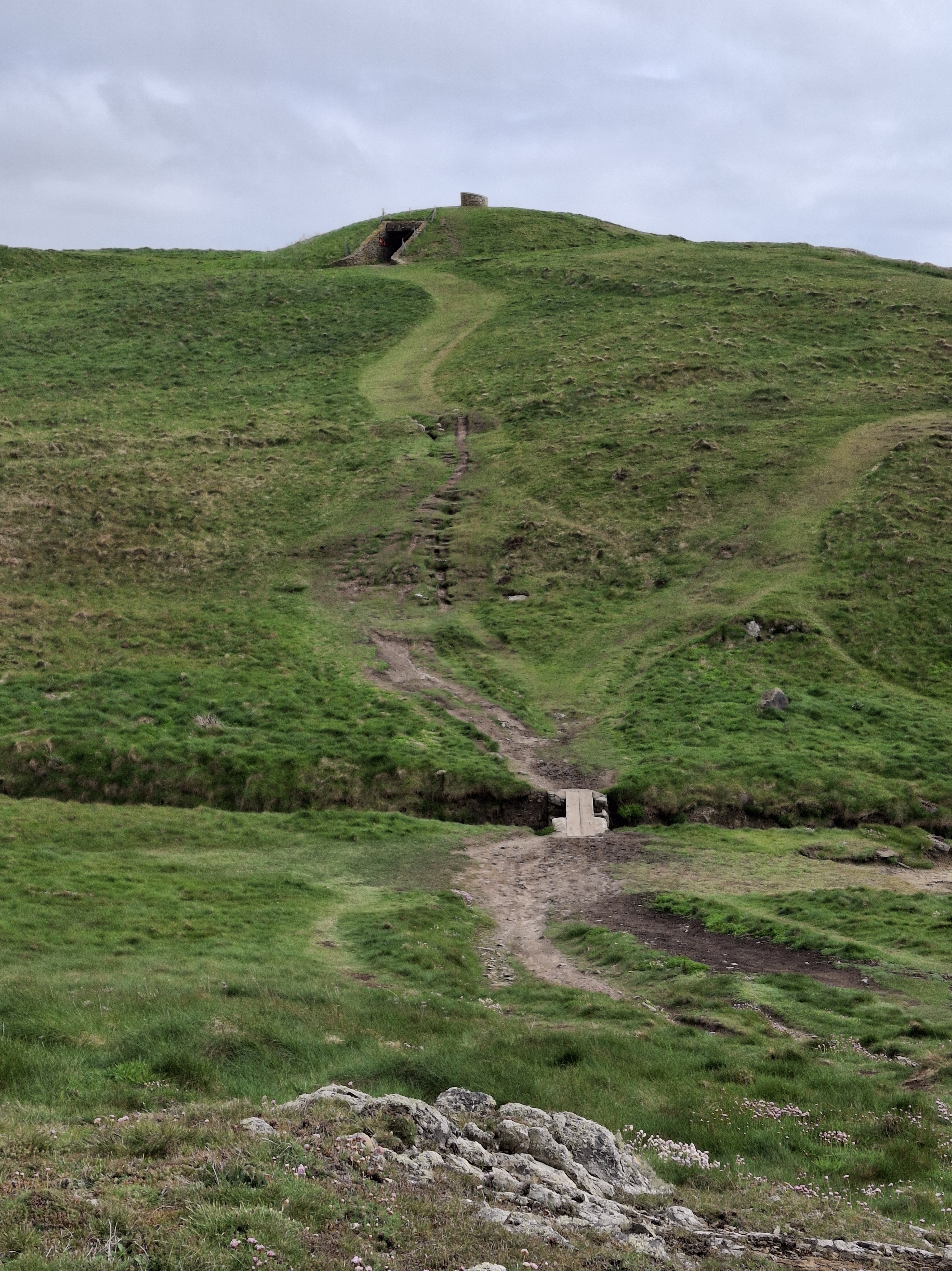
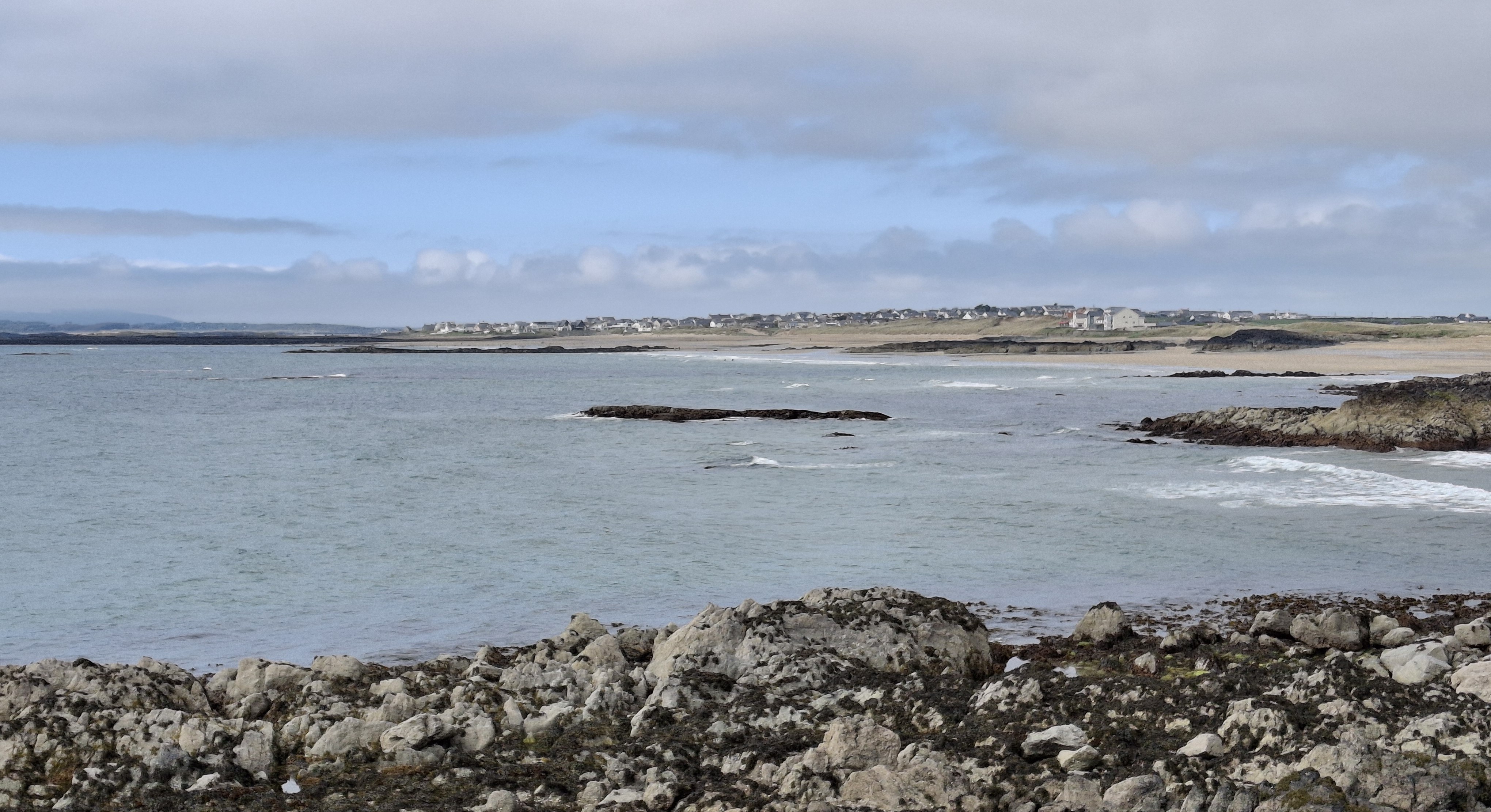
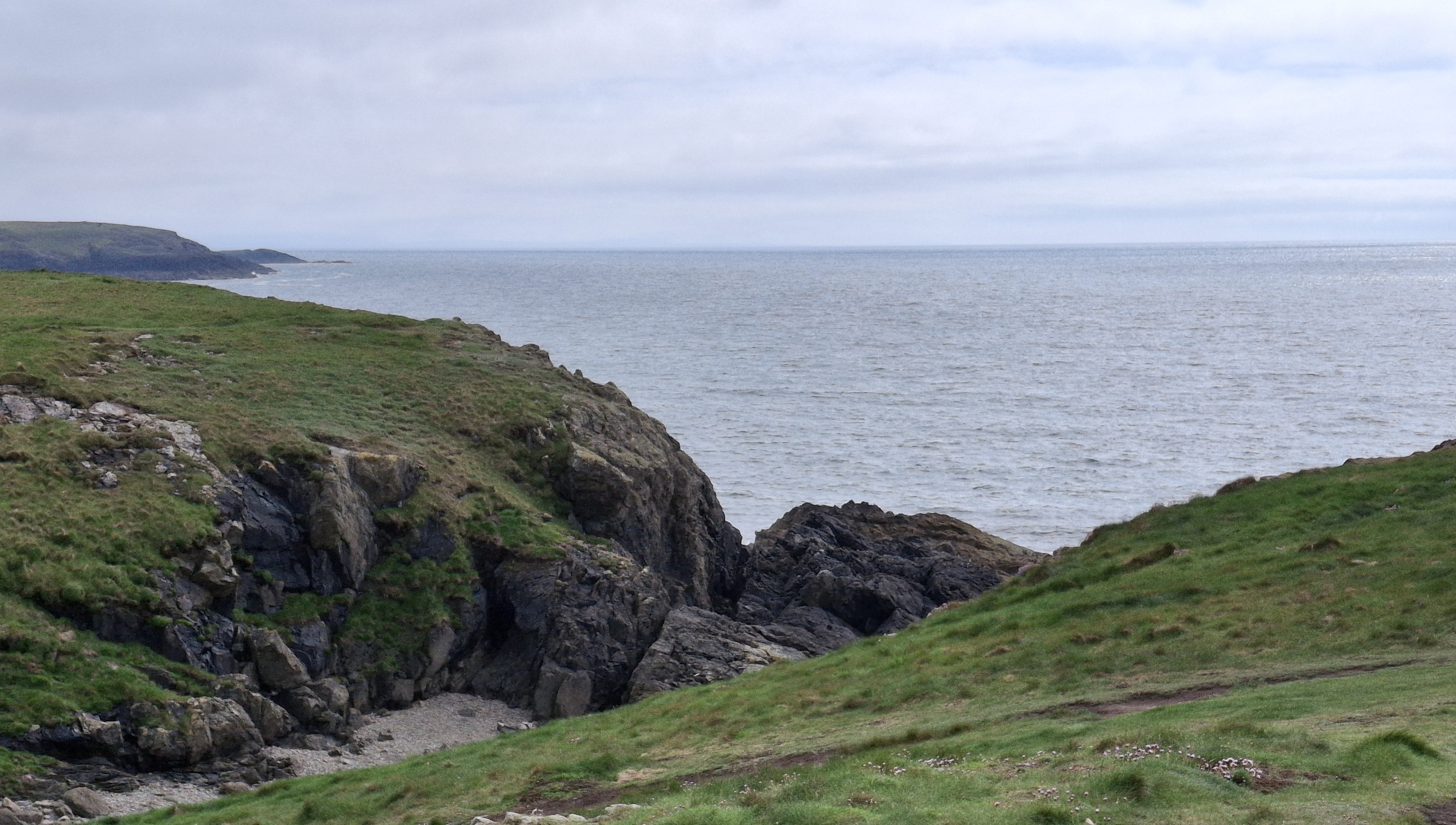
Barclodiad y Gawres means “The Giantess’s Apronful” in English. There are carparks nearby to reach the site, followed by a short walk along a pretty spectacular coastal path, with great views across the beaches towards Rhosneigr. The monument is visible from the road, and eventually you’ll reach it standing atop a hill.
The entrance is gated, though it is opened up to the public at certain times. You can see inside the tomb regardless, and discern some of the stones within. I’ve not been directly inside yet, but it’s certainly something I’d like to do. Some of the stones contained inside feature patterns made by the ancients – which would be a fantastic thing to see.
The location makes this site an atmospheric viewing. With Porth Trecastell on the far side, it’s surrounded by some wonderful scenery that really makes this a wonderful, magical place. Barclodiad y Gawres is an intriguing place and worth repeated visits – the Jones archeological team shall return.
Over the last summer, my family and I spent some more time on the Isle of Anglesey in North Wales. Previously, we had visited the ancient burial chamber of Bryn Celli Ddu, which we all felt was an amazing, magical place. And so this year, we were keen to visit some more prehistoric sites on our travels around the island.
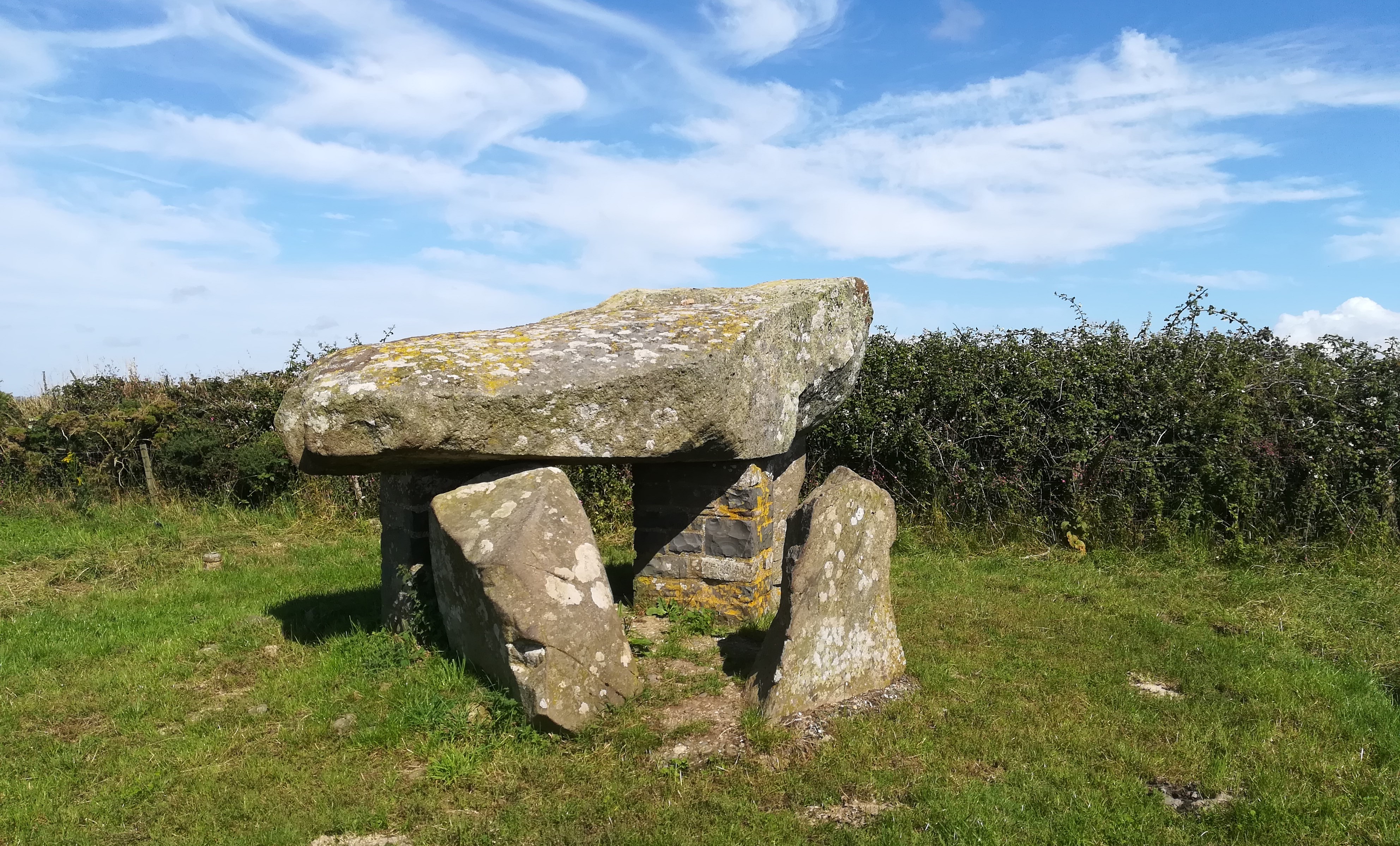
Staying as usual in Rhosneigr, our first destination was almost just around the corner, and easy to find. Heading out of Llanfaelog, taking a left turn and travelling along a small lane, Ty Newydd burial chamber was clearly sign posted and no problem to park close by. Hopping over a stone wall, the monument was visible immediately.
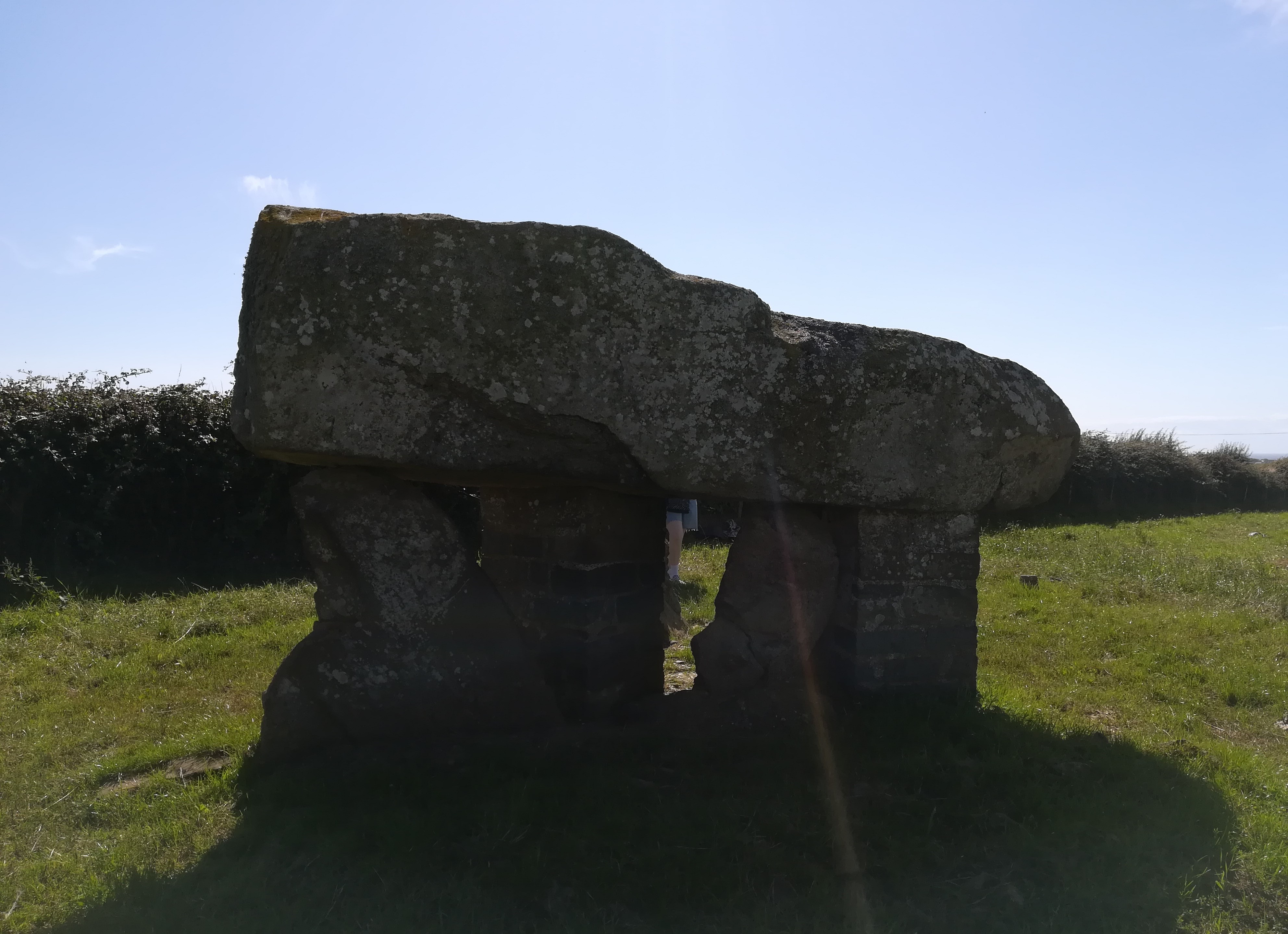
Ty Newydd stands in the corner of a field and though brick supports help to hold it up, the site is still impressive. It dates to the Neolithic age and was a communal place to bury the dead. With the capstone lying across the supports, Ty Newydd resembles a mini Stonehenge, and still awe inspiring.
Our first site was very straight forward to discover, encouraged by this and the wonder of standing close to something so unfathomably old, were decided to look for more.
Trefignath tomb was not as simple to locate, but it was definitely worth the effort. We headed up towards Trearddur Bay, and after a few wrong turns, found ourselves near a truck park. We knew the location was nearby, but coudn’t see any signage. With double yellows lining the road, parking was restricted. Pulling into a small turning space, we scouted about and – noticing a similar stone wall to Ty Newydd, could just see the top of the monument.
This site is actually three burial chambers constructed in close proximity throughout different periods of the Neolithic age. Although some of the construction has collapsed, the three chambers are still clearly identifiable and create quite a stirring experience. As per Bryn Celli Ddu, there’s obviously still some relevance here, with flowers and other items left on the site.
Our explorations came to an end eventually, it was time for the intrepid Jones archaeologists to retire. Both sites we had discovered were inspiring to visit, brilliantly magical places that were shrouded in mystery and history alike. There are plenty more ancient monuments to visit in the area, we’ll save those fpor another time.
The highlight of my family holiday to Anglesey, North Wales this year was my visit to the ancient burial chamber, Bryn Celli Ddu.
The island of Anglesey (Ynys Môn in Welsh) is famously associated with the druids and ancient Celtic society. Many prehistoric sites can be found dotted around the whole of the island, from standing stones to burial chambers such as this. These sites blend myth and legend with actual history.
Bryn Celli Ddu dates back to around 3,000 BC, where originally it comprised of a henge – consisting of a bank, ditch and circle of standing stones. This was replaced around a thousand years later by a mound concealing a tomb, with a passageway leading to the centre. On the summer solstice, light shines directly down the passage to illuminate the central chamber.
We were able to park nearby and took a winding path which eventually opened up into a field. There in the middle of the field was the unmistakable mound of Bryn Celli Ddu. We were able to explore the site, and enter the small passageway to the tomb in the centre of the mound, crouching somewhat to negotiate the low height.
Light seeped in through the entrance, and through a gap in the opposite side. Inside the confined space, previous visitors had left various mementoes of religious or magickal importance, such as feathers, coins and flowers.
There was definitely a feeling that we were somewhere special, somewhere that although we may not understand why, held great significance. We were stood right in the heart of history itself, surrounded by questions and mysteries.
Bryn Celli Ddu is a fascinating place to visit. It made a huge impression on me, and I intend to visit similar sites in the future. If you’re in the area, make sure you turn off the main road and follow your way to this ancient and magical site.
Eagle-eyed readers may have noticed the header image, up there at the top of Platinum Al’s Virtual Hot Tub. The curious may have wondered – if they don’t already know – where that image is. The answer: a place called Parga, which can be found on the north western coast of mainland Greece.
The beautiful seaside town of Parga has been a preferred holiday destination for Mrs Platinum Al and myself for many years. Last year, 2022, was the first time we had been abroad for a holiday for seven years, so we were longing to return to this idyllic location. We took our daughter along too, for what was her third trip there.
What first strikes a visitor to Parga is the fantastic view across the town beach, Krioneri, with the small island and white church across the bay. It really is picture postcard perfect. The pastel coloured, Venetian style buildings of the town surround the bay and reach back up into the hills.
Above the town, across the far side, is a medieval castle – now in ruins, but still watching over everything below. It offers great views of the town and island below.
Within the town are many bars, tavernas, restaurants and shops to provide for every need. We’ve discovered many favourites over the years which are great to return to. And there are always new places to discover.
A walk along the harbour, with a stop for a drink in a relaxing taverna, is always a great way to begin an evening. Follow that with some traditional Greek cuisine in a small, traditional restaurant and you can’t go wrong. There are lots of dishes to try, and again, old favourites to enjoy.
The friendly, welcoming nature of the Greek people is well known. For most of our trips to Parga, we have stayed with Christos Giakis and family at Irini Studios. The family are excellent hosts, never failing to go above and beyond to make any visitor welcome and looked after.
Irini Studios boasts a fine pool to cool off in, after spending time lazing in the sun on the loungers. There’s also a very well stocked bar and a menu featuring many delicious meals – everything you could wish for.
Other ways to spend time include a visit to the beaches – a swim across to the island from town beach is easier than it looks and good fun. Water sports are available at Valtos beach, a walk or boat ride away. There are interesting walks around the olive groves and the town is worth exploring too.
Parga is a wonderful piece of paradise. It’s somewhere we love to visit and hope to go again soon.
That’s enough info for now, though. I don’t want too many readers of this blog to be inspired to visit, for fear of ruining things. Let’s keep it our little secret, yes?






 Platinum Al's Virtual Hot Tub